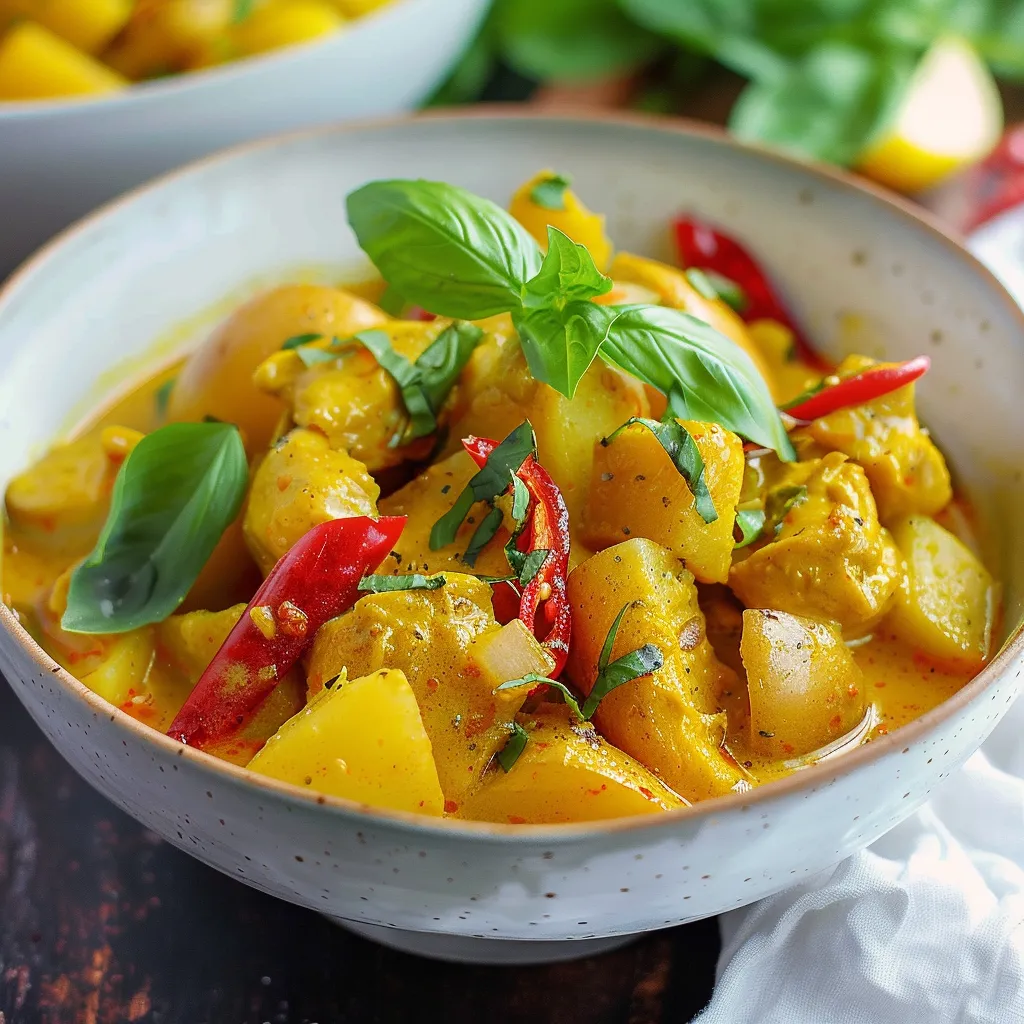
My Go-To Yellow Thai Curry: Easy, Comforting, & Anti-Inflammatory
There are some dishes that transcend mere meals, becoming cherished rituals that nourish both body and soul. For me, that dish is unequivocally
my favorite yellow Thai curry. It's more than just a recipe; it's a vibrant bowl of sunshine that brings warmth and comfort to even the chilliest evenings. Balancing aromatic spices, rich coconut milk, and tender ingredients, this curry delivers an authentic, restaurant-quality experience right in your own kitchen – surprisingly simple to achieve.
I first stumbled upon this culinary gem during a particularly brutal winter, desperate for a takeout alternative. The fragrant aroma that wafted from the simmering pot was instantly captivating, and when my family tasted it, they were so impressed that it quickly earned a permanent spot in our meal rotation. That golden hue and complex flavor profile have since become synonymous with cozy family dinners at our house. What makes this yellow Thai curry truly special, beyond its incredible taste, is its inherent ease of preparation and its remarkable anti-inflammatory properties, thanks to powerhouse ingredients like turmeric.
Why This Yellow Curry Became My Go-To Comfort Meal
The journey to making this specific yellow curry
my favorite yellow Thai curry began with a craving for something exotic yet deeply comforting. I found that many store-bought Thai curries lacked the depth and nuance I remembered from my travels. This recipe, however, captures the essence of authentic Thai cuisine, making it incredibly satisfying. The delicate balance of sweet, salty, sour, and a gentle warmth from the spices creates a symphony of flavors that truly sets it apart.
What I love most is how effortlessly it comes together. Despite its complex taste, the preparation is straightforward, perfect for a busy weeknight yet impressive enough for guests. The combination of tender chicken (or your preferred protein), hearty potatoes, and vibrant vegetables like carrots and bell peppers creates a well-rounded meal that fills you up without weighing you down. And as it simmers, the fragrant spices—lemongrass, galangal, garlic, and the star, turmeric—infuse your home with an aroma that promises pure deliciousness. This sensory experience alone is enough to elevate a regular dinner into a therapeutic escape. Beyond the comforting warmth, the inclusion of turmeric isn't just for that beautiful golden color; it's a key player in the dish's health benefits, making it an anti-inflammatory powerhouse.
Unpacking the Authentic Flavors of Gaeng Karee
To truly appreciate
my favorite yellow Thai curry, it helps to understand its origins and defining characteristics. Known as
Gaeng Karee in Thailand, yellow curry holds a unique position in Thai cuisine. It’s often considered one of the milder curry varieties, making it an excellent entry point for those new to Thai flavors or who prefer less heat than its fiery red and green cousins. Its distinctive golden color, which is both appealing and indicative of its core ingredients, comes primarily from turmeric and, in some authentic recipes, dried yellow chilies.
At its heart, Gaeng Karee is a testament to the art of balancing robust flavors with creamy richness. The essential components that give it its soul are:
*
Curry Paste: The very foundation of any Thai curry. This concentrated blend of fresh and dried herbs and spices dictates the overall character of the dish.
*
Coconut Milk: Non-negotiable for authenticity, coconut milk provides the luscious, creamy texture and helps mellow the spices, contributing to that signature rich mouthfeel.
*
Aromatic Spices: A medley including coriander, cumin, lemongrass, galangal, garlic, and ginger—each contributing its unique layer to the complex flavor profile.
One of the beauties of yellow curry lies in its incredible versatility. It graciously welcomes a variety of vegetables, and I've found that the classic combination of chicken, potatoes, and carrots creates a hearty and familiar base that appeals to almost everyone. However, feel free to experiment with bell peppers, green beans, or even tofu for a vegetarian twist.
Crafting Your Own Flavor Foundation: The Yellow Curry Paste
While high-quality store-bought yellow curry paste can be a time-saver, nothing quite compares to the vibrant, fresh flavors of a homemade paste. This is where you unlock the true potential of
my favorite yellow Thai curry. The process allows you to control the intensity and freshness of each ingredient, resulting in a significantly more aromatic and nuanced curry.
My preferred blend for the paste typically includes:
*
Dried Yellow Chilies: These contribute the signature golden hue and a gentle, approachable heat.
*
Fresh Galangal: Often mistaken for ginger, galangal offers a sharper, more citrusy, and piney aroma that is distinctively Thai and cannot be truly replicated by ginger.
*
Lemongrass Stalks: Providing a wonderfully fragrant, lemony, and slightly floral note.
*
Garlic and Shallots: Essential aromatics that form a savory base.
*
Fresh Turmeric: For that vibrant color and its earthy, slightly peppery flavor.
*
Coriander Seeds and Cumin Seeds: Toasted and ground, these add a warm, earthy depth.
*
Kaffir Lime Zest (or leaves): For a bright, aromatic lift.
Grinding these fresh ingredients together, traditionally in a mortar and pestle or a food processor, is a therapeutic experience that fills your kitchen with incredible scents. The effort truly pays off in the final dish. For a deeper dive into crafting your own paste and truly perfecting this art, check out
Master Authentic Thai Yellow Curry: Restaurant Flavor at Home and
Unlock Real Gaeng Karee: Secrets to Vibrant Homemade Yellow Curry.
Step-by-Step to Your Perfect Yellow Curry
Bringing
my favorite yellow Thai curry to life is a rewarding culinary journey. Here's a simplified guide to achieving that authentic, comforting flavor:
1.
Sauté Your Aromatics & Protein: Start by lightly sautéing your chosen protein (chicken, tofu, or even prawns) until lightly browned. If using a pre-made paste, you might sauté some shallots and garlic first for extra depth.
2.
Toast the Curry Paste: This is a crucial step! Add your yellow curry paste to the pot and sauté it for a few minutes until incredibly fragrant. This process "wakes up" the spices, intensifying their flavors. Don't rush this stage; it's where the magic truly begins.
3.
Introduce Coconut Milk: Pour in a can of full-fat coconut milk. Stir well, scraping up any browned bits from the bottom of the pot. Bring it to a gentle simmer, allowing the flavors to meld.
4.
Add Vegetables & Simmer: Incorporate your heartier vegetables first, like potatoes and carrots, as they take longer to cook. Once they've softened slightly, add faster-cooking vegetables such as bell peppers. Continue to simmer until all vegetables are tender and the sauce has thickened slightly to your liking.
5.
Season to Perfection: This is where you truly make the curry your own. Season with good quality fish sauce for umami depth, and a touch of palm sugar (or brown sugar) to balance the flavors. Taste, adjust, and repeat until you achieve that perfect harmony of sweet, salty, and savory. A squeeze of lime juice at the end can add a wonderful bright finish.
This curry is incredibly forgiving and actually tastes even better the next day, making it an ideal candidate for meal prepping. It also freezes beautifully, allowing you to enjoy a comforting meal with minimal effort whenever the craving strikes. Serve it generously over fluffy jasmine rice to soak up every last drop of that incredible sauce.
Beyond Comfort: The Anti-Inflammatory Powerhouse
While the comforting warmth and incredible flavor are reason enough to make this yellow Thai curry, its health benefits are an equally compelling draw. The star ingredient, turmeric, is a true powerhouse. Its active compound,
curcumin, is celebrated for its potent anti-inflammatory and antioxidant properties. Regular consumption of turmeric has been linked to numerous health advantages, from supporting joint health to boosting cognitive function.
Beyond turmeric, other ingredients in this curry contribute to its wellness profile:
*
Ginger and Garlic: Both are renowned for their immune-boosting and anti-inflammatory properties.
*
Coconut Milk: While rich, it contains medium-chain triglycerides (MCTs) which can be easily metabolized by the body and may offer various health benefits.
*
Fresh Vegetables: Loaded with vitamins, minerals, and fiber, they contribute to overall health and well-being.
Enjoying
my favorite yellow Thai curry isn't just about indulging in a delicious meal; it's about nourishing your body with wholesome ingredients that actively promote health and reduce inflammation. It's a testament to how flavorful food can also be incredibly good for you.
Embrace Your New Go-To
This yellow Thai curry has earned its place as
my favorite yellow Thai curry for all the right reasons: it's incredibly easy to make, provides deep comfort, and is packed with authentic, complex flavors. What truly elevates it is the added bonus of its anti-inflammatory properties, turning a delicious meal into a wellness booster. Whether you're seeking a soul-warming dinner on a cold night, an impressive dish for entertaining, or a healthy meal prep option, this Gaeng Karee recipe delivers every time. I encourage you to make it your own and discover the joy of creating restaurant-quality, anti-inflammatory Thai food right in your home.